
Downloadable autism material: visual support for autism at home
Searching for downloadable autism material is often the first step many families and professionals take when they want to bring more structure and predictability to the daily life of a child on the autism spectrum. In this guide we explain what visual support is and why it helps, what types of material exist (pictograms, routines, social stories, schedules) and some simple good practices for using it at home starting today.
What this guide covers
What visual support is and why it helps
Visual support is any resource that translates information into images, pictograms or clear diagrams, instead of relying only on spoken language. For many children on the autism spectrum, visual information is processed more easily and more stably than a verbal instruction that vanishes the moment it's said: an image can be looked at as many times as needed, with no time pressure.
Its main purpose is to reduce uncertainty. Knowing what will happen next, how long an activity will last or what is expected in a specific social situation lowers anticipatory anxiety and eases transitions between tasks, which are often one of the hardest moments of the day.
Types of downloadable autism material
Visual routines
Sequences of pictograms that break an everyday activity down into ordered steps: washing hands, getting dressed, getting ready to leave the house. Each pictogram represents one specific step, so the child can follow the sequence independently and anticipate what comes next.
Short social stories
Short, very concrete texts that describe a common social situation (arriving at break time, going to the doctor, a birthday party) along with the expected response, supported by pictograms. They help the child mentally rehearse the situation before living it, reducing the surprise on the day it really happens.
Visual schedules
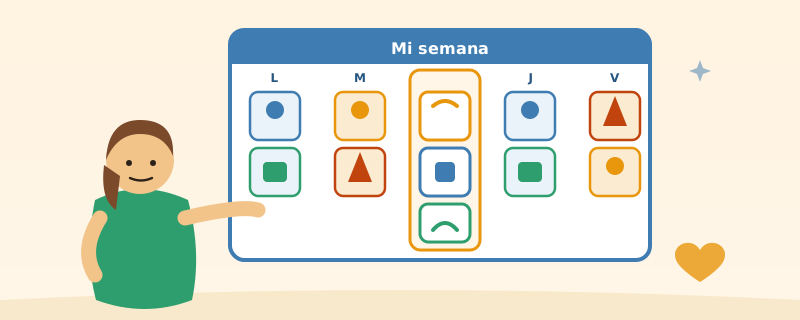
An outline of the day or the week with space to represent each activity through a pictogram or a keyword. They make it possible to anticipate changes of plan in advance (for example, marking a day off school differently) rather than communicating them only out loud in the moment.
Identifying emotions
Cards with clear facial expressions linked to a word (joy, sadness, anger, surprise) that help put a name to what is felt, a necessary first step towards being able to communicate or manage it better.
Good practice when using it at home
- Place the material somewhere visible and stable, such as a wall or a folder always kept in the same spot, so the child knows where to check it when they need it.
- Update the routine or schedule in advance, not at the last minute, especially if there is a change of plan.
- Always use the same pictogram for the same idea. Changing the symbol for an activity from one day to the next adds confusion instead of reducing it.
- Let the child take part by marking off or removing each step as they complete it, rather than just looking at it passively.
- Combine the visual with simple, calm language; don't use it as a total substitute for talking to the child, but as support for communication.
- Start with few routines and expand little by little, instead of introducing a schedule, social stories and emotions all at once.
A tip that applies throughout: consistency matters more than the amount of material. A single visual routine used well every day usually works better than many different cards used irregularly.
This article offers general information and support activities. Zubibook is not a healthcare provider or an accredited educational institution: it does not replace the diagnosis or follow-up of a professional. If you have any doubt about a child's development, consult a specialist.
Remember: this material is for general support. It does not replace the assessment or follow-up of a healthcare or educational professional specialised in autism.
Next step: material tailored to their real routine
If you want to go beyond loose templates, at Zubibook you can generate a workbook with visual routines, social stories and emotion cards tailored to the age, language and specific profile of your child or pupil, ready to download as a PDF.
Create a tailored autism visual-support workbook
Choose age, difficulty and language and generate a print-ready PDF activity workbook in minutes.