Homework with dyslexia or ADHD: how to take the fight out of every afternoon
There is a time of day that many families with a child with dyslexia or ADHD dread from breakfast onwards: homework time. It starts with good intentions and twenty minutes later one person is crying and the other is angry. And the next day, the same again.
The bad news is that pushing harder doesn't fix it. The good news is that almost everything that turns that hour into a battle is how it is set up, not how hard the child is trying.

First: the task the school sends home isn't always the task to be done
A child with dyslexia takes two or three times longer to read the same thing. If it takes five minutes to decode the wording of a maths problem, that "half-hour" homework is not half an hour for them, and nobody at school has worked that out.
It's the same with ADHD: the difficulty isn't knowing how to do it, it's getting started, staying focused and finishing.
So the first decision isn't how to do the homework, but how much time you'll spend on it today. You choose the time, not the number of exercises. And you say that time out loud before starting.
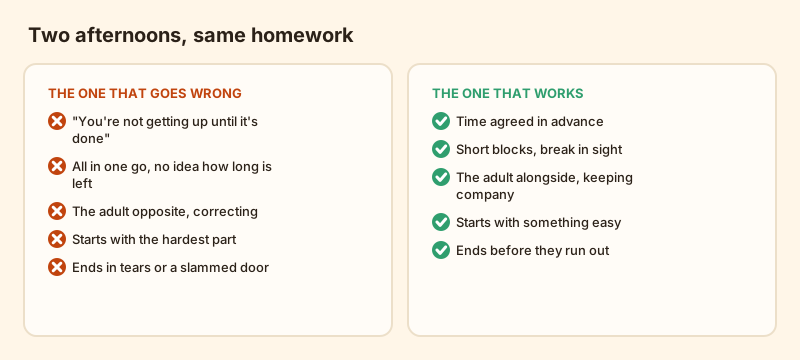
The setting matters more than it seems
- A clear desk. Only what's needed for the subject at hand. Every extra object is an invitation.
- Direct light on the paper and, if possible, back to the door.
- Phone and tablet out of the room. Not face down: out.
- The adult beside them, not opposite. Opposite is an assessment; beside is company. It changes the tone of the whole conversation.

Short blocks, breaks in sight
This is what changes things the most, and it's hard to believe until you try it for two weeks.

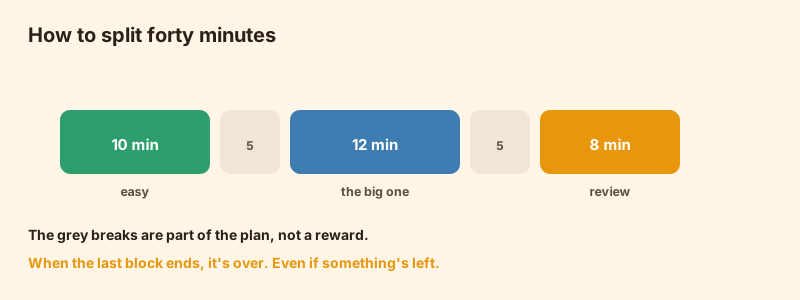
Instead of "until you're done", split the time into short blocks with breaks in between. Ten or twelve minutes for younger children, fifteen or twenty from about age ten. And the break is visible: an hourglass, a timer, something that shows how long is left without having to ask.
Three rules hold this together:
- Start with something they can do on their own. Getting started is the hard part; make the first task a win.
- The big task goes in the second block, when they're engaged but not yet worn out.
- When time's up, it's over. Even if something's left. This is the hardest part for adults and the fastest way to bring the conflict down.
If the work doesn't fit into a reasonable time for their age, that isn't the child's problem: it's information for the school. We cover it in how to talk to the school about adjustments.
What the adult can do (and what's best avoided)
Don't correct every mistake as it happens. Interrupting every two lines breaks what little concentration there is. Mark it at the end, and only two or three things.
Don't always read the instructions for them, but don't refuse either. If reading the question takes half their energy, read it yourself and let them do the thinking. The task is maths, not reading.
And don't turn the afternoon into a verdict on their ability.
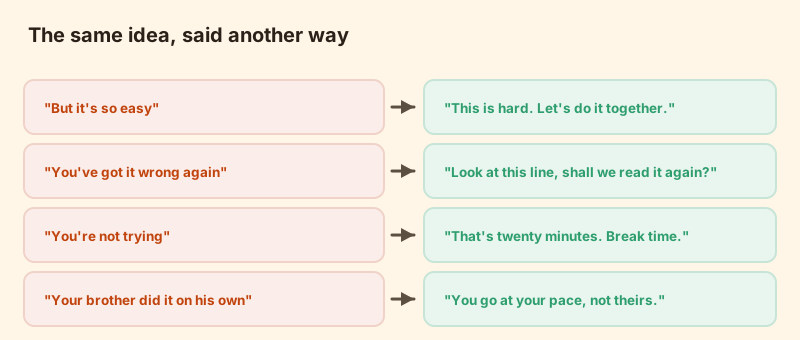
When the conflict is already entrenched
If you've been at war for months, the problem is no longer the homework: it's the link between that table and feeling bad. That's when it pays to lower the bar a lot for a couple of weeks: less time than you think is needed, always finish on a good note, and don't argue even once over the exercise book. It recovers faster than you'd think.
And if you're looking for activities that don't feel like more homework, activities for children with dyslexia and printable ADHD exercises have material designed for short sessions.
What really needs protecting
The homework from any given Tuesday is worth nothing compared with the idea the child is forming of themselves while doing it. If every afternoon ends with them convinced they're clumsy, that will last much longer than tomorrow's topic.
Bringing the conflict down isn't giving up. It's protecting the one thing that can't be recovered.
This guide is for general information and does not replace a professional assessment. If the difficulty persists, the school's special educational needs team is the first place to go.